Be careful or it could be game over!

Saturday, 31 December 2011

Tuesday, 27 December 2011

Cinematography

Cinematography is the making of the film this contains camera angles. Camera angles include the use of framing and positioning of objects and characters, as well as this it includes movements of characters.

Different camera angles give different results, such as:
Extreme Close Up (ECU) [This highlights a particular emotion of a character or an object]
Close Up
Mid-shot
Long Shot
High Angle Shot [Shows power]
Low Angle Shot [Shows vulnerability]
Point Of View (POV)
Shot Reverse Shot
Over the Shoulder Shot

Saturday, 24 December 2011

Film Language

Camera:  Camera movement can include:
1. Steadi-cam (camera is worn by a person and follows the action by foot)
2. Panning Shot (camera moves slowly side to side on a fixed axis)
3. Tilt Shot (camera moves up and down from a fixed axis)
4. Crane Shot (camera, mounted on crane, moves around at a distance above ground level)
5. Tracking Shot (camera follows the action, by moving along tracks)
6. Rolling Shot (camera moves diagonally making the image askew, usually used to suggested a character bring ill or drugged)


Editing: Two main things to know about editing is Speed of Editing (how long does each shot last?) and Style of Editing (how each shot is joined together?)
Types of transitions:   1. Straight Cut
                                 2. Fade-Out (where the screen fades to black)
                                 3. Dissolve (where one image is slowly brought in beneath another)
                                 4. Wipe Cut (where one part of the screen moves to wipe across the other)
                                 5. Jump Cut (where the audience's attention is brought onto something)

Sound: For sound there are two types of sounds and they are diegetic sound, that can be on or off screen (it is sound which is part of the film world that we are watching, such as dialogue) and non-diegetic sound (sound which is not recognised as being apart of the film world, such as a voice-over or background music) There is also parallel and contrapuntal sound, parallel sound is when the music and image on screen are the same where as contrapuntal sound is when the sound does not fit the image on screen, for example a violent image on screen and the music playing is saying "sunshine lollipops and rainbows"

Mis-En Scene: For mis-en scene there are five important features and they are:
                        1. Settings and Props
                        2. Costume, Hair & Make-up
                        3. Facial Expressions & Body Language
                        4. Lighting & Colour
                        5. Positioning of Characters & Objects Within In A Frame

Expressionism - This refers to the expression of a state of mind through the mise-en scene

Wednesday, 21 December 2011

Analysis of Past Students' Work

This opening is from last years media students and it is called 'The Night Walker'. It opens with someone playing the piano and features a thriller convention which is blood this instantly intrigues the audience what happened to the persons hands, where did the blood come from? The music begins off with a sense of innocence as it continues it sounds adventure type of music, perfect for a chase scene which is what the audience get. The antagonist is a mysterious figure and is chasing after the protagonist, we only get a silhouette of the antagonist (which is made by using backlighting). It looks as if it is a political thriller since at the beginning their are peoples eyes begin cut and crossed out. There is not much dialogue besides the protagonists running, the sound of the eyes, which makes it more intriguing, then finally at the end, it finishes off with a cliffhanger.

Tuesday, 20 December 2011

Brick

Conventions within the film is the dead body which is an enigma
Camera Techniques: High angle shot, shot reverse shot (dead body vs protagonist) and flashbacks

Editing: Mostly straight cuts, simple and do not complicate or make the transition from one scene to another look worthless.

Sound: The music creates an atmosphere of sadness, the dialogue from a phone call causes tension and suspense (mystery)

Mis-En Scene: There is a graphic match used from the present scene to a flashback by using the victims (dead body) bangles

Saturday, 17 December 2011

Memento

MEMENTO - ONE OF THE SMARTEST THRILLERS MADE. 
    - This film has an extremely difficult narrative structure where events are told in ten minute segments and backwards. This echos confusion that the protagonist feels as he struggles to remember things.

Included in this film..

Conventions such as: blood, abandoned building and a dead body.

Camera techniques in this film use a wide range of shots; close up and ECU (Extreme Close Up) to highlight either a character or an object, long shot of the abandoned building to give the audience a feel of the surrounding the characters are presently in and then slowly begins moving closer towards the location. Filmed in reverse, black and white which symbolises flashbacks and then goes in to colour, back to the present day.

Editing: Slow dissolve into the film.

Sound: The mood is tense right from the beginning even before we the audience see a visual, we know something terrible has happened, the music is the clue.

Mis-En Scene: Red (blood) symbolises danger and destruction. The photo of the dead man immediately make the audience intrigued, do we trust the protagonist?

Thursday, 15 December 2011

Cliffhangers

Cliffhangers are sometimes, not always used, often features the protagonist in a precarious or difficult dilemma, or confronted with a shocking revelation. This can entice the audience to keep watching in order to see how the situation resolves itself.

Example Film: 'The Italian Job' [1969] (a literal cliffhanger) gives us, the audience a witty example of a cliffhanger in it's famous ending, however it is not exactly, strictly speaking a thriller, but it has the conventional device of a thriller.

Wednesday, 14 December 2011

North By Northwest

"that plane's dusting crops where there ain't no crops"

In North by Northwest, protagonist, Thornhill is sent to meet a man called Kaplan to explain why he has been mistaken for a government agent and we believe, that that the man can help him however instead of anyone helping him a femme fatal tells him to go to an unknown location, in the middle of nowhere. Where he gets attacked by a plane. This is a red herring because we, the audience believe he's about to find the truth instead he's getting attacked.

Red Herrings

A red herring is the name given to a device which intends to divert the audience from the truth or an item of significance. Can work with other devices such as enigmas to create suspense.

For example, in Saw two characters spend time imprisoned in a room in which a third person lies dead. Throughout the film, both characters appear to be guilty of a series of murders, until it is discovered at the end that the third person in the room is not actually dead, but is, in fact, the killer.


Enigmas

This refers to a puzzle, something mysterious, inexplicable or a riddle or difficult problem. In thrillers this is commonly something which the protagonist has to try to find out or solve before the narrative is resolved and the film finishes.

Tuesday, 13 December 2011

Narrative - Structure, formulas and devices

For examples: use of 'continuity editing'

The clear establishment of 'cause and effect' plotting which establishes character character motivations and helps tell an interesting story which proceeds logically and steadily.

The Psychological Thriller

The mind, conflict and past

The suspense created psychological thrillers often comes from two or more characters, preying upon one another's minds, either by playing deceptive games or by merely trying to demolish the other's mental state. An example of this is the film called Sloth.

Sometimes the suspense comes from within one solitary character where characters must resolve conflicts with their own minds. Usually, this conflict is an effort to understand something that has happened to them. An example of this are Bond films.

Saturday, 10 December 2011

British Board of Film Classification

The BBFC (British Board of Film Classification) is responsible for the national classification of films in the UK. Below are the classifications and it's guidelines.

File:BBFC U.svg
         Universal- Suitable for all


A “U” film should be suitable for audience aged four years an over, it should have positive moral framework and should offer reassuring counterbalances to any violence, threat or horror. Scary sequences should be mild, brief and unlikely to cause undue anxiety to young children. The outcome should be reassuring.

File:BBFC PG.svg
Parental Guidance


General viewing, but some scenes may be unsuitable for young children. Frightening sequences should not be prolonged or intense. Fantasy settings may be a mitigating factor. No detail of potentially dangerous behaviour which young children are likely to copy. No glamorisation of realistic or easily accessible weapons. Moderate violence, without detail, may be allowed, if justified by its context (for example history, comedy or fantasy).

File:BBFC 12.svg
No one younger than 12 may see a “12A” film in a cinema unless accompanied by an adult and films classified “12A” are not recommended for a child below 12. Moderate physical and psychological threat may be permitted, provided disturbing sequences are not frequent or sustained.

File:BBFC 15.svg
No one younger than 15 may see a ‘15’ film in a cinema. No one younger than 15 may rent or buy a ‘15’ rated video work. Strong threat and menace are permitted unless sadistic or sexualised. Violence may be strong but should not dwell on the infliction of pain or injury.

File:BBFC 18.svg
No-one younger than 18 may see an ‘18’ film in a cinema. No-one younger than 18 may rent or buy an ‘18’ rated video. Adults should be free to choose their own entertainment. Exceptions in the followings areas:

    - Where the material is in breach of the criminal law, or has been created through the commission of a criminal offence.
    - Where material or treatment appears to the BBFC to risk harm to individuals or, through their behaviour, to society.
    - Where there are more explicit images of sexual activity which cannot be justified by context.

Thursday, 8 December 2011

AS Coursework - The Brief

The titles and opening of a new fiction film in the thriller genre to last a maximum of two minutes.

The coursework is 50% of the course

Marks are awarded for excellence in the following criteria:

   - Holding a shot steady
   - Framing a shot 
   - Using a variety of shots (ECU, Close-ups, medium shots and long shots)
   - Shooting material appropriate to the task set
   - Editing so that the meaning is apparent to the viewer
   - Using varied transitions (straight cut, dissolve and fade out), captions and other effects
   - Using sound with images

Wednesday, 7 December 2011

Hitchcock's Maguffin

A maguffin (sometimes spelt MacGuffin) is a plot device that motivates the characters and advances the story, but has little relevance to the story. It's just useful for the characters within the diegetic world.

"We have a name in the studio, and we call it a 'MacGuffin.' It is the mechanical element that usually crops up in the story. In crook stories it is always the necklace; in spy stories it's always the papers." - Alfred Hitchcock


In the film Notorious (made by Alfred Hitchcock) the protagonist is trying to find the secret about the Nazis which he finds in a wine bottle, however the audience are more interested if the protagonist gets the girl at end.

Rope - Suspense

The film Rope (made by Alfred Hitchcock) It tells the story of two young, wealthy men, Brandon and Phillip, who strangle and murder a friend of theirs just to see if they can get away with it. They then invite other close friends (including the murdered man's parents) to their apartment for a dinner party, whilst hiding the body in a chest/box in their sitting room, just to see if they can get away with it.

The suspense is created through the body in the chest/box. What will happen? Will the body (and the two men ) be discovered and brought to justice? Do we, the audience even want this to happen?

Tuesday, 6 December 2011

Suspense and Shock

Imagine a scene in a classroom with students and a teacher. The camera reveals that there is a bomb under the table to the audience but however in the diegetic world (the students and the teacher) are aware of it. Will we be saved? Will the bomb go off? This is SUSPENSE

An example of suspense is in the film, Sabotage (made by Alfred Hitchcock). In this film, a boy has been given packages to deliver (by a terrorist) which us, the audience know that inside is a bomb that is due to go off at 1:45pm, however the boy is unaware of this fact. The tension builds as the time comes closer and closer, near the end Hitchcock adds more tension by repeating a certain imagery which is of clocks; while we are seeing this imagery the sound is parallel as it is of a ticking sound. This warns the audience that the time is near the end which has brought the suspense to it's climax.

Imagine the same scene except that instead of the camera revealing the bomb under the table, it simply just explodes without any warning, killing everyone which is present. This is SHOCK.

An example of shock is the film Children of Men. In part of this film the audience see a man go into a coffee shop, which is crowed with people watching the news that is reporting the death of the youngest person alive, the news seems abnormal and almost a trick to get a large number of people in one place. After the man leaves the shop a few minutes later the shop explodes, with a dark gust of smoke coming from the shop

.

Sunday, 4 December 2011

Suspense - Alfred Hitchcock

"In the 39 steps, the suspense films abandon both thrills and suspense when the falsely accused character finally reaches safely" - Rick Altman (Film/Genre)

Saturday, 3 December 2011

The Suspense 'Thriller' - Alfred Hitchcock

"Under a strong influence of Alfred Hitchcock, thrillers often begin with a crime and the accusation of an innocent bystander. Where the accused to contact authorities, no doubt the case could be promptly solved, but instead the poor bystander runs from the law thus further jeopardising life and limb" - Rick Altman (Film/Genre)

Thursday, 1 December 2011

Quote from Alfred Hitchcock

"I am a typed director. If I made Cinderella, the audience would immediately be looking for a body on the coach." 

This implies that Hitchcock was hugely known for making films in the thriller genre and this also shows that society generalise; he may have made a large number of thrillers however he did make other genres as well therefore he was versatile.

Wednesday, 30 November 2011

Quote from Alfred Hitchcock

"If it's a good movie, the sound could go off and the audience would still have a perfectly clear idea of what was going on." 

Tuesday, 29 November 2011

History of Alfred Hitchcock


Alfred Joseph Hitchcock is an important/interesting person to research about because he has made many popular thrillers. He was born on August thirteen 1899 in Leytonstone, London. He was known as the master of suspense whose films became the benchmark of psychological thrillers. After having a successful career in Britain making silent movies and early talkies, he moved to America (Hollywood) in 1956. Hitchcock directed fifty two films in total however one of the films is lost. One of Hitchcock's sayings is "There is no terror in the bang, only in the anticipation of it." Meaning the suspense is worse than the event itself. 


                                                                  Psycho
                                                     
                                                                  39 Steps
                                                     
                                                                         North by Northwest

Saturday, 26 November 2011

Stereotypes

Stereotypes are socially constructed beliefs, ideas or opinions about specific social groups or types of individuals. A stereotype is used to categorise a group of people. The majority of people don’t understand that type of person, so they put them into classification, thinking that everyone who is that or similar to that needs to be like that or anyone who acts like their classification is one of the stereotypes. 

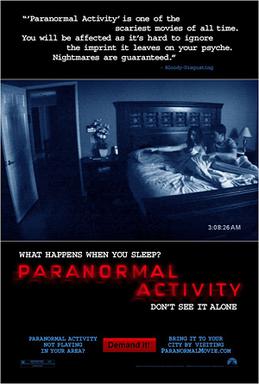
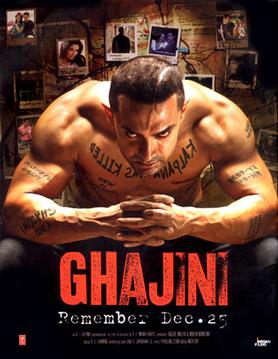
In films and television programs they usually play to a stereotype, many thriller films include stereotypes such as Paranormal Activity, Source Code and Ghanjini have the stereotype that women are weaker than men; the men in these films are portrayed as strong, dominant males however they cannot help the women in their lives, in their situations they are just as helpless. 

Friday, 25 November 2011

Rules

Some filmmakers will claim that 'there are no rules' or 'rules are there to be broken' however most will agree that there are certain CONVENTIONS that mainstream films observe in order for them to be acceptable by mass audience.

Thursday, 24 November 2011

Types of Thrillers

There are numerous types of thrillers the most obvious one is psychological thrillers, other types are spy, political, legal and conspirarcy thrillers.

Examples of films which fit into the sub catergories within thrillers:

- Spy - James Bond & Tinka, Tailor, Soldier, Spy
- Political - Ides of March & V for Vendetta
- Legal - Black Like Me (John Howard Griffin)
- Conspirarcy - State of Play & All the President's Men
- Psychological - Psycho (Alfred Hitchcock)

Wednesday, 23 November 2011

The "Rule"

Animated director Chuck Jones worked at Warner Brothers for decades making short movies starring Buggs Bunny, Daffy Duck and company. He also made Road Runner cartoons which from the first episode, an elaborate set of rules emerged.

Road Runner followed these set of rules:
  • The Road Runner cannot harm or upset the coyote except by going "Meep Meep"
  • No outside force can harm the coyote, only his own ineptitude or the failure of Acme products.
  • The coyote can stop anytime - If he were not a fanatic.
  • No dialogue evere except "Meep Meep"
  • The Road Runner must stay on the road - Otherwise logically he would not be called the Road Runner.
  • All action must be confided to the natural environment of the two characters - The Southwest American Desert.
  • All materials, tools, weapons, or mechanical conveniences must be obtained from the Acme Corporation.
  • Whenever possible, make gravity the coyote's greatest enemy. 
  • The coyote is always more humiliated than harmed by his failures.
In class we watched an example of the rules in actions, below is the example and see for yourself.


Thriller Coventions


[This image is a spider diagram of what could be related to thriller conventions, this image is made be Tajinder Sandhu on word]


[Coventions of thrillers; from the Robert Clack Media Blog]

Tuesday, 22 November 2011

Definition of Thriller

"A thriller is a very difficult genre to pin down because it covers a wide range of films. Thrillers are films of suspense that are suppose to instil terror into the audience." - Susan Hayward, Key Concepts in film studies

Preliminary Task

This is the final product.


Sunday, 20 November 2011

Making of Preliminary Task

I was in a group of four, we planned our idea of what the preliminary task will be about. We filmed the preliminary task within a day, we included everything required for our preliminary task such as match on action, shot/reverse shot, eye-line match and correctly showed the 180 degree rule. After we filmed, we made a decision that I would be the editor; I used a program called Final Cut Pro X. I cut the film into sequences to make it easier to edit, after I cut the film to the relevant parts, added transitions at the beginning and end which was a fade in and out. When the editing was finished I uploaded the final product on to youtube.

Thursday, 10 November 2011

My Preliminary Task

My preliminary task involves two characters, character A walks towards the door then through it, this shows match on action. Once character A walks through the door they look towards character B, this shows the eye line match. Character A and B exchange lines of dialogue (argument) which shows shot/reverse shot. Finally character A runs out and that is the end of the drama. While all of this is shot, we are keeping in mind that the 180 degree rule has to be correct.

Wednesday, 9 November 2011

Preliminary Task

The preliminary task is about continuity editing, it must show:

- Match On Action
- Shot/Reverse Shot
- 180 Degree Rule
- Eye Line Match
    Match on action is when the audience see a character start an action in one shot and continue it into the second shot. For example the first shot could be of an character walking up to the door and the second shot would be the character on the other side of the door and walking towards someone or something.

    Shot/Reverse shot would be during a conversation, over the shoulder shot of character A, over the shoulder shot of character B then back to character A. 

    The 180 degree rule is a basic guideline that the character should always have the same left/right relationship within the scene. If the camera passes over the imaginary axis connecting the two subject together it is called crossing the line. For example if the character is shot walking across the room and then shot again however the camera has moved 180 degrees this would look as if the character is walking in one direction, then suddenly turns and walks in the opposite direction. 

    Eye line match is when the character is looking in a particular direction at an object or person, then the camera follows the direction of the gaze. 

    Tuesday, 1 November 2011

    Paranormal Activity

    Paranormal Activity is a good example of how to build suspense within a film, slowly. The camera work shows the emotions of the characters and their state of mind; this film is made like a home movie in which the camera work is not accurate, therefore the audience cannot base their emotions on camera work; however at the end of the film the camera is at a side angle which could represent another side of the character which the audience has not seen before. The audience would still understand what is happening within the film if the voices were taken out of the film and only the soundtrack was left; this would be a positive because the film would be more exaggerated. The performance of the actors was very convincing, by using body language and facial expressions. The hair, costume and make-up of the actors is natural, just like the lighting, on the night scenes the camera would be recording in night mode which would affect how the lighting would look if it was on normal mode. In this film it explores gender roles within the household,  the woman is seen to be the vulnerable figure and the male is portrayed as strong and does not admit defeat to frightful situations.

    Friday, 14 October 2011

    Source Code


    The opening scene of source code is very effective because of the Mise-En Scene, camerawork and music; they all blend together to make an interesting opening which was not dull for one second. The camerawork goes from the general to the specific. The music at the beginning started right from the beginning of the scene, it instantly adds suspense as the film begins. The music reminds the viewer of action which lets the audience know what type of genre it could potentially be. Near the end of the opening scene it is low key lighting because shadows are created on the face of the character. It is set in a train and the actors performs the emotion of confusion well, it is very believable. The explosion at the end makes the viewer excited about what could happen next, the confusion of the character fascinates the audience, why can he not remember who he is or what is happening.

    Thursday, 13 October 2011

    Ghajini

    I thought it would interesting to find out how other counties make thrillers and if they involve suspense in the same way American/English films do, therefore I analysed a Hindi film called Ghajini (which is an action thriller). I found the opening scene interesting it starts with a medical student and her friends working on a project about the human brain to an abandoned building with a man getting thrown through the door. The actors performed incredibility and their appearances were done well, one character stood out to me because he had a scar in his head which made me wonder what could of happened to this character and what made him attack the other person. The clothes the characters were wearing looked casual which meant it was in the present not in either the past or future. Lighting is used well to keep the identity a mystery, they used backlighting to create a silhouette and low key lighting for the effect of harsh shadows.

    Zodiac

    Zodiac begins as a romance because it is of a couple celebrating the fourth of july, however the fun does not last long they drive up to an isolated mountain side and eventually get killed by a suspicious character who's face is not shown (which adds to the mysteriousness). The actors performed excellently they showed emotions of excitement, fear, relaxation to finally panic through body language and facial expressions rather than just be dialogue. It looks to be set in the 1970s in American (around about this time American had a serial killer by the name of "Zodiac Killer" which the film is based around), I can tell this by the hairstyle and the clothing of the girl in the scene, also by what they were driving. Lighting used in this scene is under-lighting and low key lighting to create shadows to add to the suspense of the moment. This film definitely makes the audience want to continue watching since the opening makes the viewer intrigued to what might happen next.

    Monday, 10 October 2011

    No Country For Old Men

    In this film the scene goes from isolation to the excitement of death. This makes the audience want to continue watching the film because they are in a sense of wonder why the actor killed the people, what made him do it and what is the full story. The actor within the scene is calculated, collected and calm, he uses unusual methods of killing his victims, one with handcuffs and the other with an oxygen chamber.

    Friday, 7 October 2011

    A History of Violence


    The first film which I watched was "A History of Violence" this film built suspense gradually which made the audience want to continue watching the rest of the film. The clothing of the actors were casual which went with their emotions, one was wearing black leather which made him seem superior than the other and also symbolizes death. The actors are calm and collected which gives the audience false hope, the scene with the little girl the man calmly says "shhh" and then suddenly shoots her which makes the opening exciting. There are two types of lighting used, natural and dim.


    Analyzing Modern Thriller Openings

    In my media lesson we have been analyzing the opening of thrillers, I have analyzed mise-en scene (what is in the frame) and used the acronym C.L.A.M.P.S which stands for:

    Costume (Casual, traditional, celebrating clothes)
    Lighting (Back-lighting, under lighting and top lighting)
    Actors (Their performances including facial expressions, are they convincing)  
    Make-up (Normal, highlights specific features of the face, dramatic)
    Props (What were the props? Did they add to the scene?)
    Setting (Where was the scene set? Did the setting add to the scene?)

    The three films which I watched and analyzed in detail were "A History of Violence" "No Country for Old Men" and "Zodiac". These three films had one thing in common which was suspense, they gave the audience a false case of insurance. 

    Thursday, 6 October 2011

    Sound


    For my thriller I am going to include this childhood nursery rhyme called "Ring Around the Rosy". The mood I am trying to portray is fear, if I succeed in my goal then the audience will feel empathy for the characters within my thriller. The sound will be parallel because the image will relate to the sound and my idea of children at a park, however when the song ends you may get a lil SHOCK!

    Wednesday, 21 September 2011

    Lighting

    I've learnt by using different lighting techniques you can change the mood of scene. Backlighting is used to create a silhouettes usually used on the villain of the scene. The image to the left is an example of backlighting. Top lighting is used to highlight the features of the character, which usually gives a glamourous view. Under lighting is the main light used from beneath the character which creates harsh shadows, this type of lighting is used in horrors. For my coursework I would use backlighting to keep the villains identity a mystery, which leaves it to the imagination of the audience to what the villain looks like.

    Saturday, 17 September 2011

    Paranormal Activity Remix


    This is the official video for paranormal activity remix. The video is like a horror styled thriller this links to my coursework because I want my thriller film to to be a horror thriller.

    My idea for the horror thriller is two innocent children at the park playing in the playground; all of a sudden it becomes dark, there's a serial killer with a mask, the children are alone and have to be cunning. Their aim is to escape the park and stay alive otherwise it will be a bloody ending for them...

    Friday, 16 September 2011

    Alfred Hitchcock's North by Northwest

    North by Northwest was made in 1959; it is a classic thriller because it has all the elements which are required in a thriller film. I only watched thirty minutes of the film and all the elements were included in the first fifteen minutes of the film such as a villain driven plot (kidnapping, wanting the hero to co-operate) hero (innocent, mistaken identity) cliff-hanger (in this case the hero in the film was literally hanging off the cliff) tension, excitement and suspense (the audience would all be wondering in their minds 'will the hero survive or die?').

    Welcome!

    Welcome to my AS media studies blog. This blog will chart my progress throughout my coursework portfolio. It will have daily updates of what is relating to my coursework piece.